PAL
PAL
  • Home
  • Portfolio
  • Art Events
  • Art Tips
  • Shop
  • Fitness
  • Food Tips
  • Mental Health
  • Cosmos
  • Famous Artists
  • Investing
  • Partners
  • About
  • Contact
  • More
    • Home
    • Portfolio
    • Art Events
    • Art Tips
    • Shop
    • Fitness
    • Food Tips
    • Mental Health
    • Cosmos
    • Famous Artists
    • Investing
    • Partners
    • About
    • Contact
  • Sign In
  • Create Account

  • Orders
  • My Account
  • Signed in as:

  • filler@godaddy.com


  • Orders
  • My Account
  • Sign out

Signed in as:

filler@godaddy.com

  • Home
  • Portfolio
  • Art Events
  • Art Tips
  • Shop
  • Fitness
  • Food Tips
  • Mental Health
  • Cosmos
  • Famous Artists
  • Investing
  • Partners
  • About
  • Contact

Account

  • Orders
  • My Account
  • Sign out

  • Sign In
  • Orders
  • My Account

#SHARE

The practitioner will guide you through a structured yet flexible art therapy process designed to gently access emotion, reawaken creativity, and rebuild the mind-body connection. Recognizing the history of emotional suppression, somatic distress, and creative disconnection, this approach prioritizes emotional safety, sensory grounding, and progressive self-expression. 


By intentionally engaging brain regions involved in emotion regulation (limbic system), body awareness (insula), and cognitive control (prefrontal cortex), the sessions aim to help:


- Feel calmer through soothing, repetitive art, such as mandalas and soft colour blending.

- Reconnect with the body using tactile media like clay and guided body-outline drawings.

- Release emotion nonverbally through abstract painting, mixed media, and spontaneous mark-making.

- Regain creative confidence by reintroducing safe, low-pressure art exercises that rebuild artistic trust.


As you become comfortable with expression and reflection, the practitioner will gradually integrate visual journaling, symbolism, and guided conversation—transforming your artwork into a personal language for insight and healing. 


This process supports not just symptom relief, like reduced anxiety and improved sleep, but a deeper transformation: helping you move from feeling trapped in the mind to becoming grounded, expressive, and emotionally present in your life. This holistic approach can also complement your fitness journey, providing a creative outlet that nurtures both mental and emotional well-being in the comfort of your home, while keeping you informed through the latest news in art therapy.

Colour-coded brain regions with labels for key neural structures and networks.

Emotional Awareness & Compassion Through Creative Expression


At PAL Studio, emotional awareness is approached as both a creative practice and a pathway toward psychological balance. Inspired by Emotional Awareness: Overcoming the Obstacles to Psychological Balance and Compassion by the Dalai Lama XIV and Paul Ekman, this philosophy recognizes that emotions are not weaknesses to suppress, but signals to understand. When emotions are identified, named, and expressed safely, their intensity often softens — creating space for clarity, compassion, and healing.


The emotional wheel above becomes a powerful visual tool for self-reflection. By recognizing the difference between frustration and rage, calm and contentment, sadness and pensiveness, individuals begin building emotional literacy — the ability to understand what they truly feel beneath automatic reactions.


PAL Studio integrates this understanding into guided creative wellness practices that support emotional grounding, self-expression, nervous system regulation, and reconnection with the body through art.


Why Emotional Awareness Matters

Many people experience:

  • Emotional suppression
  • Chronic stress or anxiety
  • Creative disconnection
  • Difficulty expressing feelings verbally
  • Mental overwhelm or emotional numbness


Art-based emotional exploration offers a non-verbal way to process internal experiences gently and safely. Through colour, movement, texture, symbols, and repetition, emotions can be externalized rather than carried internally.

The goal is not perfection or artistic skill.
The goal is awareness, release, reflection, and reconnection.


Main Takeaway


“Labeling emotions accurately softens their grip.”

This simple but transformative insight encourages people to pause and identify what they are truly feeling. Instead of saying:

  • “I’m bad”
  • “I’m stressed”
  • “I’m angry”


The emotional wheel helps refine awareness:

  • Overwhelmed
  • Disappointed
  • Restless
  • Hurt
  • Isolated
  • Frustrated
  • Uneasy
  • Hopeful
  • Grateful


Naming emotions creates psychological distance from them, allowing the nervous system to settle and the mind to respond more consciously rather than react automatically.


Helpful Emotional Awareness Tips


1. Use the Emotion Wheel Daily

Spend 1–2 minutes identifying:

  • What emotion am I feeling?
  • Where do I feel it in my body?
  • What may have triggered it?

The more specific the emotional language becomes, the more manageable emotions often feel.


2. Create Before You Explain

Sometimes the body understands emotion before the mind does.

Try:

  • Abstract painting
  • Colour blending
  • Scribble drawing
  • Clay sculpting
  • Symbol collage
  • Visual journaling

Expression does not need words to be meaningful.


3. Practice Non-Judgmental Observation

Instead of:

  • “I shouldn’t feel this.”

Try:

  • “This emotion is present right now.”

Emotions are temporary experiences, not permanent identities.


4. Ground the Nervous System Through Repetition

Repetitive creative exercises help calm the mind and regulate stress responses.

Helpful exercises:

  • Mandalas
  • Zentangles
  • Line flow drawing
  • Pattern repetition
  • Soft shading exercises

These activities support emotional regulation and mindfulness simultaneously.


5. Connect Emotion to the Body

Emotions often appear physically before mentally.

Notice:

  • Tight shoulders
  • Heavy chest
  • Jaw tension
  • Shallow breathing
  • Restlessness
  • Fatigue

Body-awareness practices help reconnect emotional and physical wellbeing.


6. Replace Suppression With Safe Expression

Suppressing emotion can increase internal stress and disconnection.

Healthy outlets include:

  • Art
  • Walking
  • Music
  • Breathwork
  • Journaling
  • Conversation
  • Movement practices

Expression creates release.


7. Build Compassion Through Awareness

Understanding your own emotional patterns often increases empathy for others.

Emotional awareness helps people:

  • Respond more calmly
  • Communicate more clearly
  • Build healthier relationships
  • Reduce reactive behaviour
  • Develop deeper self-understanding


This mirrors the central dialogue explored by Paul Ekman and the Dalai Lama: awareness creates the foundation for compassion.


How PAL Studio Supports Emotional Wellness

PAL Studio’s creative wellness approach combines:

  • Emotional awareness
  • Symbolism
  • Guided reflection
  • Art-based mindfulness
  • Neuroscience-informed creative exercises
  • Safe emotional expression practices


Sessions may include:

  • Visual journaling
  • Abstract emotional painting
  • Symbol exploration
  • Mood-based colour work
  • Grounding exercises
  • Reflective conversation
  • Guided creative prompts


The process is designed to help individuals move:

From suppression → expression

From overwhelm → awareness

From disconnection → presence

Emotional Awareness Reminders


  • Emotions are information, not identity.
  • Awareness creates choice.
  • Creativity can become a form of healing.
  • Compassion begins with understanding.
  • Small moments of self-awareness create long-term change.
  • You do not need to “fix” every feeling immediately.
  • Expression is healthier than suppression.
  • Emotional growth is a process, not a performance.

PAL Studio Mental Health & Creative Wellness

PAL Studio creates supportive spaces where creativity, emotional awareness, and holistic wellbeing intersect through art, reflection, movement, and guided self-expression. The focus is not clinical diagnosis, but helping individuals reconnect with themselves in safe, grounding, and meaningful ways through creative practice.


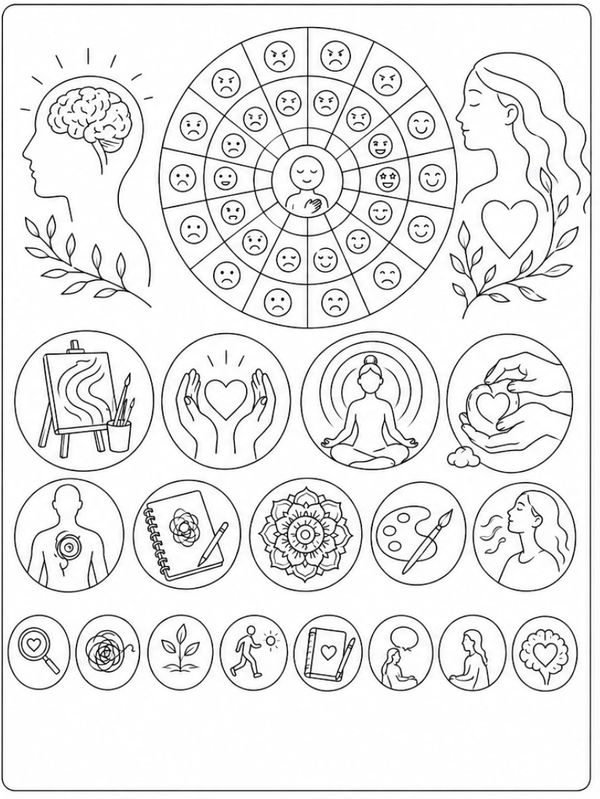
Colorful emotion wheel illustrating various feelings and their intensities.A circular diagram mapping colours to emotions. Core feelings (calm, happy, content, trust, excited) sit at the center, expanding outward into nuanced states (joy → ecstasy, sadness → pensiveness, anger → rage). Each colour family represents an emotional spectrum:
Red/Orange: Anger, Disgust
Yellow: Joy, Excitement
Green: Trust, Acceptance
Blue: Sadness, Pensiveness
Purple: Surprise, Amazement

MENTAL HEALTH • ART • MOVEMENT • SELF-REALIZATION


At PAL Studio, healing is approached as a journey of reconnection — reconnecting the mind, body, emotions, creativity, breath, and inner self.


Inspired by neuroscience-informed art therapy, mindful movement, emotional expression, and spiritual self-awareness, this space is designed to help people move from overwhelm into grounding, clarity, and self-understanding.


Like the teachings shared in Autobiography of a Yogi, the path toward healing is not about becoming someone else — it is about remembering who you already are beneath stress, anxiety, pressure, emotional suppression, and disconnection.


The process begins gently.


Sometimes healing starts with:
• slowing down
• drawing without judgment
• breathing deeply
• reconnecting to the body
• creating with your hands
• expressing emotion without words
• allowing stillness


Through art, movement, reflection, symbolism, journaling, colour, and sensory-based practices, individuals can begin rebuilding trust with themselves in a safe and supportive environment.


ROADMAP TO INNER BALANCE

  1. Awareness
    Recognizing emotional stress, burnout, anxiety, numbness, or creative disconnection.
  2. Grounding
    Using breathwork, repetitive art, movement, texture, and calming exercises to regulate the nervous system.
  3. Expression
    Releasing thoughts and emotions safely through drawing, painting, abstract work, collage, journaling, and symbolic creation.
  4. Reflection
    Observing patterns, emotions, and experiences with curiosity instead of judgment.
  5. Reconnection
    Rebuilding connection to creativity, confidence, identity, purpose, and inner calm.
  6. Integration
    Applying mindfulness, movement, self-awareness, and emotional tools into everyday life.


SUPPORTIVE TOOLS FOR THE JOURNEY

• Mandalas & repetitive drawing for calming the mind
• Clay & tactile work for reconnecting to the body
• Visual journaling for emotional processing
• Breathwork & meditation for nervous system regulation
• Symbolism & colour exploration for self-reflection
• Movement & fitness for mind-body connection
• Nature, sunlight, hydration, and sleep support
• Community workshops for shared healing and connection
• Guided art exercises that encourage safe self-expression


HELPFUL DAILY PRACTICES

• Start the morning without your phone for 10–20 minutes
• Take mindful walks without distractions
• Create something imperfect every day
• Practice slow breathing during moments of stress
• Drink water before caffeine
• Stretch or move the body daily
• Reduce overstimulation from social media and noise
• Keep a visual or written journal
• Spend time in silence regularly
• Allow emotions to move instead of suppressing them
• Focus on progress, not perfection
• Rest without guilt
• Reach out for support when needed


THE PAL STUDIO APPROACH

PAL Studio combines creativity, wellness, emotional support, movement, symbolism, and community-based healing practices to help individuals reconnect with themselves in a grounded and accessible way.


It is about creating space for expression, awareness, creativity, reflection, and personal transformation.

Healing is not linear.
Growth takes time.
Every small step matters.


Core Foundations

  • Art therapy principles (art + psychology + healing)
  • History of art therapy + evolution of practice
  • Symbolism (incl. Rorschach-based interpretation)
  • Ethics, scope, and practitioner positioning 

Neuroscience Integration

  • Neuroplasticity + emotional regulation
  • Memory, behavior, fear, reward systems
  • Mindfulness + brain-based interventions
  • Designing neuroscience-informed art exercises

Practical Modalities (Hands-on)

  • Drawing (charcoal, ink, pencil)
  • Painting techniques
  • Sculpture (clay, mixed media)
  • Collage (symbolic composition)


Applied exercises include:

  • Mood boards
  • Memory boxes
  • Mandalas / Zentangles
  • Anxiety & depression case exercises 

Client Work + Application

  • How to guide emotional expression sessions
  • Structuring therapeutic art exercises
  • Adapting for:
    • Children
    • Adults
    • Seniors
  • Creating safe emotional spaces

Tools & Templates Included

  • Treatment plans
  • Intake forms
  • Client agreements
  • Referral forms
  • Consultation scripts
  • 50+ guided art therapy exercises

WHAT IT CAN DO FOR CLIENTS / PATIENTS


Emotional Outcomes

  • Improve emotional expression (non-verbal processing)
  • Reduce anxiety + stress
  • Support depression coping
  • Increase self-awareness


Cognitive / Neurological Benefits

  • Strengthen memory + recall
  • Improve focus + attention
  • Enhance sensory integration
  • Support emotional regulation


Behavioral / Psychological Impact

  • Develop coping mechanisms
  • Process trauma (non-clinical level)
  • Build resilience + identity
  • Encourage self-reflection


Social / Functional Outcomes

  • Improve communication (especially non-verbal clients)
  • Build connection in group settings
  • Support developmental growth (children, neurodivergent clients)


Practical Use Cases (Client Scenarios)

  • Anxiety regulation through structured drawing
  • Trauma-safe expression via abstract art
  • Mood tracking via visual journaling
  • Identity exploration through symbolic collage

Credential

  • Art Therapy Practitioner Certificate (non-clinical)
  • Delivered upon course completion (no supervised practicum required)


Accreditation Bodies 

  • IPHM (International Practitioners of Holistic Medicine)
    → Recognizes holistic/wellness practitioners (not a medical regulator)
  • CMA (Complementary Medical Association)
    → Validates complementary health modalities; supports practitioner directories
  • CPD (Continuing Professional Development Certification Service)
    → Confirms educational hours meet professional development standards


Interpretation

  • Recognized in wellness, coaching, and holistic sectors
  • Not equivalent to regulated licensure (e.g., psychotherapy, counselling, clinical art therapy)
  • No authority to:
    • Diagnose mental health disorders
    • Provide clinical treatment plans
    • Bill through medical insurance systems (unless bundled under another licensed service)


Structured Session Design

You can build repeatable, outcome-driven sessions:


Framework Example

  • Intake → Emotional theme identification
  • Art intervention (guided or open)
  • Reflection + meaning-making
  • Grounding / closure

Result
→ Sessions become systematic, not improvised


Emotional Interpretation (Non-Clinical)

  • Recognize symbolic patterns (color, shape, repetition, spatial use)
  • Identify emotional themes:
    • Control vs chaos
    • Identity vs fragmentation
    • Expression vs suppression

Important Boundary
→ Interpretation is exploratory, not diagnostic


Creative Intervention Planning

You can match client state → art modality


Examples

  • Anxiety → repetitive pattern work (mandala, line flow)
  • Trauma (light/moderate) → abstract, non-representational art
  • Low mood → color activation / sensory stimulation
  • Identity exploration → collage + symbolism

Outcome
→ You develop targeted interventions, not generic activities


Client Facilitation Ability

  • Guide sessions without over-directing
  • Hold emotional space safely
  • Ask non-leading reflective questions
  • Manage group vs 1:1 dynamics


Core Skill
→ You become a process facilitator, not just an art instructor


Private Wellness / Holistic Practice

Positioning

  • Add-on modality to:
    • Massage therapy (mind-body integration)
    • Coaching
    • Energy / somatic work

Revenue Models

  • 1:1 sessions
  • Package programs (e.g., 4–8 week emotional reset)
  • Workshops


Schools / Youth Programs

Use Case

  • Emotional regulation for children
  • Behavioral expression support
  • Non-verbal communication tools

Format

  • Group sessions
  • After-school programs
  • Integration with educators / counsellors


Community Art Programs

(Strong alignment with your Gastown work)


Applications

  • Public art therapy events
  • Drop-in emotional expression spaces
  • Community healing workshops

Impact
→ Scalable, high-visibility, grant-friendly programming


Senior Care / Rehabilitation

Focus Areas

  • Cognitive stimulation
  • Memory recall (art + storytelling)
  • Emotional wellbeing
  • Motor skill engagement

Settings

  • Assisted living
  • Rehab centers
  • Community health programs


Personal Coaching / Support Roles

Integration

  • Combine with:
    • Life coaching
    • Career coaching
    • Identity / self-development work

Value Add
→ Moves clients beyond verbal processing into embodied insight


Session Pricing


LOW-LEVEL USE 


  • Drop-in, open group (8–25 people)
  • 60–120 minutes
  • Light facilitation, minimal personalization


  • 15 people × $30 = $450/session
  • Costs:
    • Materials: $5–10/person → ~$75–150
    • Space (if rented): $0–200
  • Net: ~$200–350/session


MID-LEVEL USED

  • Small group (6–12 people)
  • 2–3 hours or multi-session (2–4 sessions)
  • Light intake + guided progression


  • 10 people × $100 = $1,000/session
  • Costs:
    • Materials: $10–20/person
    • Space: $0–200
  • Net: ~$700–900/session


HIGH-LEVEL USE

  • 1:1 or small cohort (4–8 people)
  • 4–8 weeks (weekly sessions)
  • Clear outcomes + progression


PROGRAM MODEL PRICING

1:1 Premium

  • $100–200/session × 6 sessions
    → $600–1200 per client


Group Cohort

  • 6 people × $500 program
    → $3,000 per cohort


Free Art Therapy Consultation

Book Today

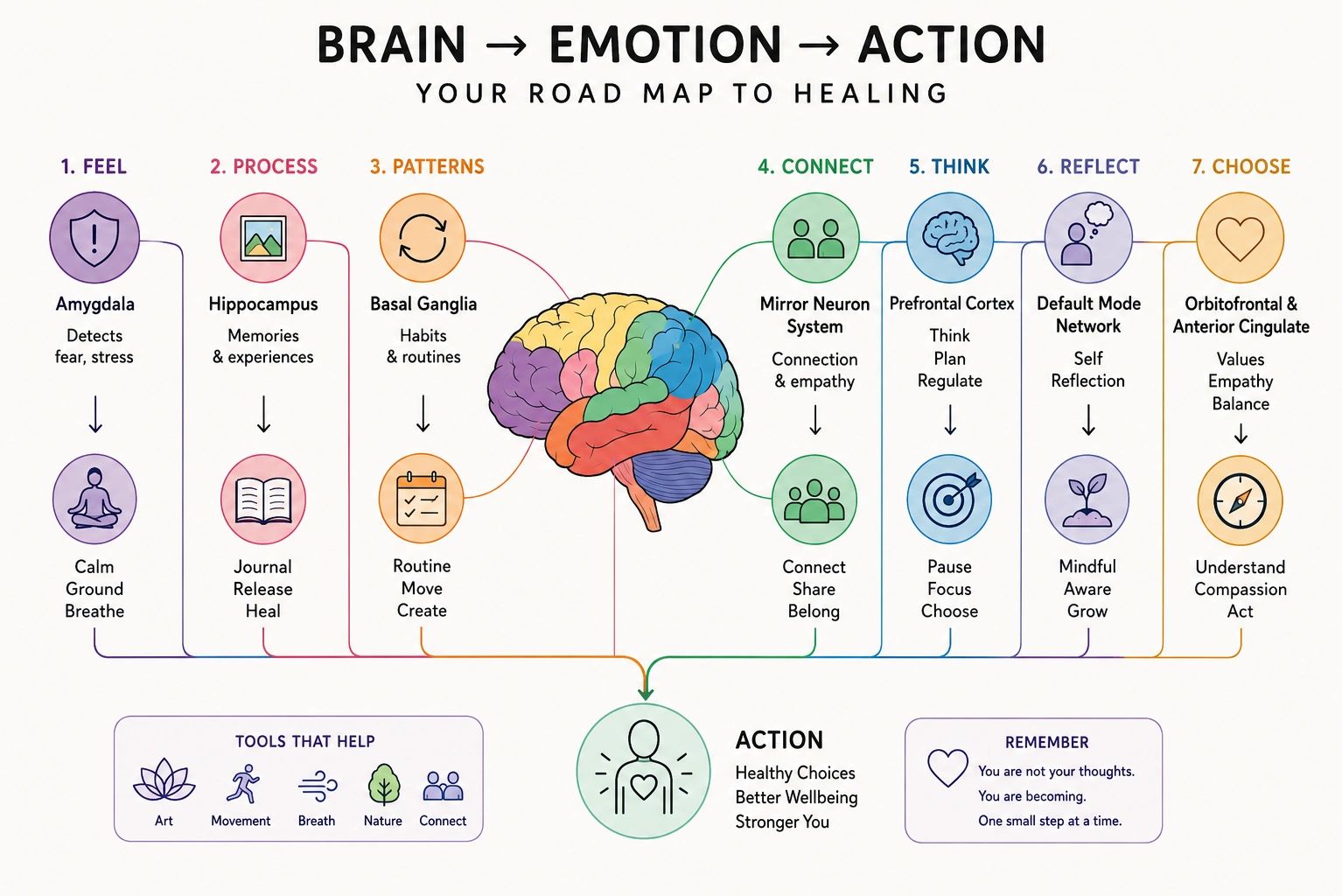
The Brain → Emotion → Action Map

Each part of the brain has a role in helping you feel, process, protect, remember, connect, and act.

Healing happens when these systems begin working together again.


The goal is to understand the signal, regulate the body, and turn emotion into healthy action.


Using art, movement, breathing, reflection, creativity, and safe human connection, people can slowly rebuild communication between these regions of the brain.


SIMPLE HUMAN ROAD MAP


1. FEELING HAPPENS

Amygdala

What it does:

Detects fear, stress, danger, emotional intensity.

Human experience:

  • Anxiety
  • Panic
  • Emotional overwhelm
  • Anger
  • Hypervigilance
  • Emotional shutdown

Helpful actions:

  • Slow breathing
  • Repetitive drawing
  • Grounding exercises
  • Holding clay or textured objects
  • Walking
  • Soft music
  • Safe human connection

Goal:

Move from:

“I am unsafe.”

to

“I can slow down.”


2. THE BODY SPEAKS

Hippocampus + Body Memory


What it does:

Stores memories, emotional associations, lived experiences.


Human experience:

  • Emotional triggers
  • Flashbacks
  • Certain places or sounds causing stress
  • Feeling “stuck in the past”


Helpful actions:

  • Journaling
  • Memory art
  • Storytelling
  • Symbol drawing
  • Gentle movement
  • Safe routines
  • Sleep support


Goal:

Move from:

“I keep reliving this.”

to

“I can process and release this safely.”

3. THE BRAIN SEARCHES FOR CONTROL


Basal Ganglia

What it does:

Creates habits, routines, repetitive behaviors.


Human experience:

  • Overthinking
  • Compulsions
  • Doom scrolling
  • Avoidance
  • Negative loops
  • Addictive behaviors


Helpful actions:

  • Structured routines
  • Fitness
  • Walking schedules
  • Creative repetition
  • Mandalas
  • Daily rituals
  • Small achievable goals


Goal:

Move from:

“I am trapped in patterns.”

to

“I can create healthier habits.”


4. THE HEART OF HUMAN CONNECTION


Mirror Neuron System

What it does:

Helps humans feel empathy, connection, belonging.


Human experience:

  • Feeling isolated
  • Emotional disconnection
  • Loneliness
  • Social anxiety
  • Absorbing emotions from others


Helpful actions:

  • Community art
  • Group exercise
  • Eye contact
  • Shared creativity
  • Supportive conversations
  • Volunteering
  • Healthy friendships


Goal:

Move from:

“I am alone.”

to

“I can connect safely with others.”


5. THINKING BEFORE REACTING

Prefrontal Cortex


What it does:

Decision-making, emotional regulation, planning, perspective.


Human experience:

  • Impulsivity
  • Brain fog
  • Emotional reactions
  • Difficulty focusing
  • Difficulty making decisions


Helpful actions:

  • Meditation
  • Breathwork
  • Reflection
  • Structured thinking
  • Reading
  • Learning
  • Art planning
  • Goal setting


Goal:

Move from:

“I react automatically.”

to

“I can pause and choose.”


6. SELF-REFLECTION & INNER WORLD

Default Mode Network (DMN)


What it does:

Self-reflection, identity, inner dialogue, imagination.

Human experience:

  • Overthinking
  • Rumination
  • Shame spirals
  • Identity confusion
  • Daydreaming
  • Creative insight

Helpful actions:

  • Mindfulness
  • Creative flow states
  • Nature
  • Journaling
  • Guided art
  • Spiritual practices
  • Limiting overstimulation

Goal:

Move from:

“I am lost in my thoughts.”

to

“I can observe my thoughts without becoming them.”


7. VALUES, EMPATHY & EMOTIONAL BALANCE

Orbitofrontal & Anterior Cingulate Cortex


What it does:

Helps with empathy, emotional balance, social awareness, moral decision-making.

Human experience:

  • Guilt
  • Emotional conflict
  • Difficulty forgiving
  • Relationship struggles
  • Emotional numbness


Helpful actions:

  • Compassion practices
  • Gratitude
  • Honest conversation
  • Art reflection
  • Emotional naming
  • Forgiveness work
  • Community support


Goal:

Move from:

“I am emotionally disconnected.”

to

“I can understand myself and others with compassion.”

THE FULL HEALING CONNECTION


Emotion → Awareness → Expression → Regulation → Action → Connection

The brain heals through:

  • repetition
  • safety
  • creativity
  • movement
  • reflection
  • human connection
  • healthy routines


This is why art therapy, fitness, mindfulness, journaling, nature, music, and supportive communities can all work together.


SIMPLE DAILY RESET SYSTEM

MORNING

  • Water
  • Stretch
  • Sunlight
  • Breathwork
  • Simple goal


Brain support:

Prefrontal Cortex + Basal Ganglia


MIDDAY

  • Movement
  • Healthy food
  • Human connection
  • Creative break


Brain support:

Mirror Neurons + Emotional Regulation Systems


EVENING

  • Reflection
  • Journaling
  • Calm music
  • Drawing
  • Reduced screen stimulation


Brain support:

DMN + Hippocampus


WHAT PAL STUDIO REPRESENTS

PAL Studio connects:

  • neuroscience
  • creativity
  • movement
  • emotional awareness
  • community
  • symbolic expression
  • wellness practices


The purpose is not perfection.

The purpose is reconnection.

Reconnection to:

  • body
  • emotion
  • creativity
  • identity
  • community
  • presence


A human being is not one brain part.

Healing happens when the whole system begins communicating again.
PAL Studio 

VANCOUVER LONDON

  • Portfolio
  • Art Events
  • Art Tips
  • Shop
  • Fitness
  • Food Tips
  • Mental Health
  • Cosmos
  • About
  • Contact

This website uses cookies.

We use cookies to analyze website traffic and optimize your website experience. By accepting our use of cookies, your data will be aggregated with all other user data.

Accept