Signed in as:
filler@godaddy.com
Signed in as:
filler@godaddy.com
Here you will explore art as a gentle and supportive way to reconnect with yourself. No artistic experience is needed, this is about expression, not creating perfect artwork.
Sessions are tailored to your comfort level and may include painting, drawing, clay, collage, journaling, and other creative activities that encourage relaxation, self-discovery, and emotional expression.
Through the creative process, you may find new ways to:
As trust and comfort grow, your artwork can become a meaningful tool for reflection, insight, and personal growth. The focus is always on creating a safe, welcoming space where you can explore, create, and heal at your own pace.
Art therapy offers more than symptom relief—it provides an opportunity to slow down, reconnect with yourself, and develop a deeper sense of balance, well-being, and self-understanding.


At PAL Studio, emotional awareness is approached as both a creative practice and a pathway toward psychological balance. Inspired by Emotional Awareness: Overcoming the Obstacles to Psychological Balance and Compassion by the Dalai Lama XIV and Paul Ekman, this philosophy recognizes that emotions are not weaknesses to suppress, but signals to understand. When emotions are identified, named, and expressed safely, their intensity often softens — creating space for clarity, compassion, and healing.
The emotional wheel above becomes a powerful visual tool for self-reflection. By recognizing the difference between frustration and rage, calm and contentment, sadness and pensiveness, individuals begin building emotional literacy — the ability to understand what they truly feel beneath automatic reactions.
PAL Studio integrates this understanding into guided creative wellness practices that support emotional grounding, self-expression, nervous system regulation, and reconnection with the body through art.
Many people experience:
Art-based emotional exploration offers a non-verbal way to process internal experiences gently and safely. Through colour, movement, texture, symbols, and repetition, emotions can be externalized rather than carried internally.
The goal is not perfection or artistic skill.
The goal is awareness, release, reflection, and reconnection.
This simple but transformative insight encourages people to pause and identify what they are truly feeling. Instead of saying:
The emotional wheel helps refine awareness:
Naming emotions creates psychological distance from them, allowing the nervous system to settle and the mind to respond more consciously rather than react automatically.
Spend 1–2 minutes identifying:
The more specific the emotional language becomes, the more manageable emotions often feel.
Sometimes the body understands emotion before the mind does.
Try:
Expression does not need words to be meaningful.
Instead of:
Try:
Emotions are temporary experiences, not permanent identities.
Repetitive creative exercises help calm the mind and regulate stress responses.
Helpful exercises:
These activities support emotional regulation and mindfulness simultaneously.
Emotions often appear physically before mentally.
Notice:
Body-awareness practices help reconnect emotional and physical wellbeing.
Suppressing emotion can increase internal stress and disconnection.
Healthy outlets include:
Expression creates release.
Understanding your own emotional patterns often increases empathy for others.
Emotional awareness helps people:
This mirrors the central dialogue explored by Paul Ekman and the Dalai Lama: awareness creates the foundation for compassion.
PAL Studio’s creative wellness approach combines:
Sessions may include:
The process is designed to help individuals move:
PAL Studio creates supportive spaces where creativity, emotional awareness, and holistic wellbeing intersect through art, reflection, movement, and guided self-expression. The focus is not clinical diagnosis, but helping individuals reconnect with themselves in safe, grounding, and meaningful ways through creative practice.

MENTAL HEALTH • ART • MOVEMENT • SELF-REALIZATION
At PAL Studio, healing is approached as a journey of reconnection — reconnecting the mind, body, emotions, creativity, breath, and inner self.
Inspired by neuroscience-informed art therapy, mindful movement, emotional expression, and spiritual self-awareness, this space is designed to help people move from overwhelm into grounding, clarity, and self-understanding.
Like the teachings shared in Autobiography of a Yogi, the path toward healing is not about becoming someone else — it is about remembering who you already are beneath stress, anxiety, pressure, emotional suppression, and disconnection.
The process begins gently.
Sometimes healing starts with:
• slowing down
• drawing without judgment
• breathing deeply
• reconnecting to the body
• creating with your hands
• expressing emotion without words
• allowing stillness
Through art, movement, reflection, symbolism, journaling, colour, and sensory-based practices, individuals can begin rebuilding trust with themselves in a safe and supportive environment.
ROADMAP TO INNER BALANCE
SUPPORTIVE TOOLS FOR THE JOURNEY
• Mandalas & repetitive drawing for calming the mind
• Clay & tactile work for reconnecting to the body
• Visual journaling for emotional processing
• Breathwork & meditation for nervous system regulation
• Symbolism & colour exploration for self-reflection
• Movement & fitness for mind-body connection
• Nature, sunlight, hydration, and sleep support
• Community workshops for shared healing and connection
• Guided art exercises that encourage safe self-expression
HELPFUL DAILY PRACTICES
• Start the morning without your phone for 10–20 minutes
• Take mindful walks without distractions
• Create something imperfect every day
• Practice slow breathing during moments of stress
• Drink water before caffeine
• Stretch or move the body daily
• Reduce overstimulation from social media and noise
• Keep a visual or written journal
• Spend time in silence regularly
• Allow emotions to move instead of suppressing them
• Focus on progress, not perfection
• Rest without guilt
• Reach out for support when needed
THE PAL STUDIO APPROACH
PAL Studio combines creativity, wellness, emotional support, movement, symbolism, and community-based healing practices to help individuals reconnect with themselves in a grounded and accessible way.
It is about creating space for expression, awareness, creativity, reflection, and personal transformation.
Healing is not linear.
Growth takes time.
Every small step matters.
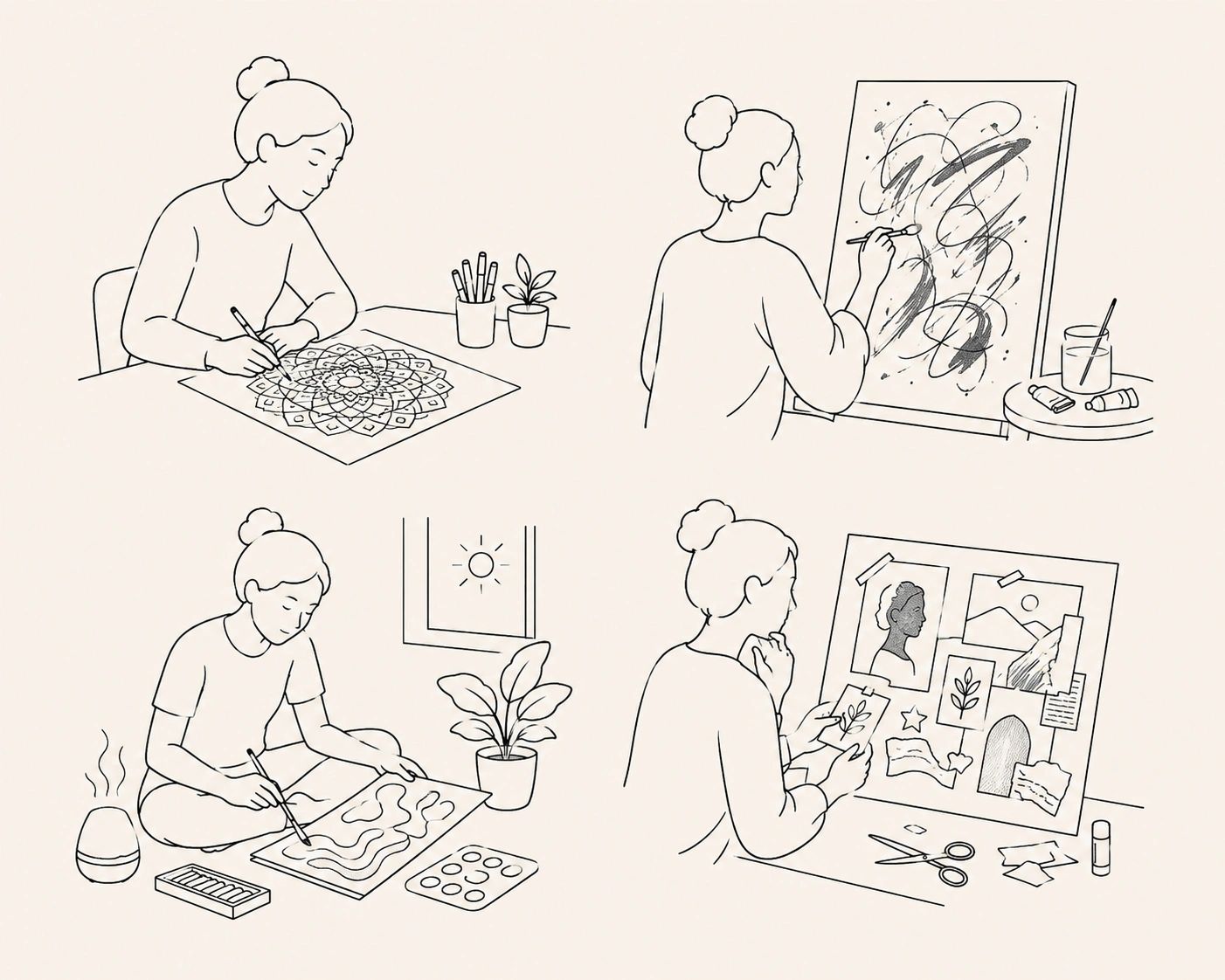
Applied exercises include:

You can build repeatable, outcome-driven sessions:
Framework Example
Result
→ Sessions become systematic, not improvised
Important Boundary
→ Interpretation is exploratory, not diagnostic
You can match client state → art modality
Examples
Outcome
→ You develop targeted interventions, not generic activities
Core Skill
→ You become a process facilitator, not just an art instructor
Positioning
Revenue Models
Use Case
Format
(Strong alignment with your Gastown work)
Applications
Impact
→ Scalable, high-visibility, grant-friendly programming
Focus Areas
Settings
Integration
Value Add
→ Moves clients beyond verbal processing into embodied insight
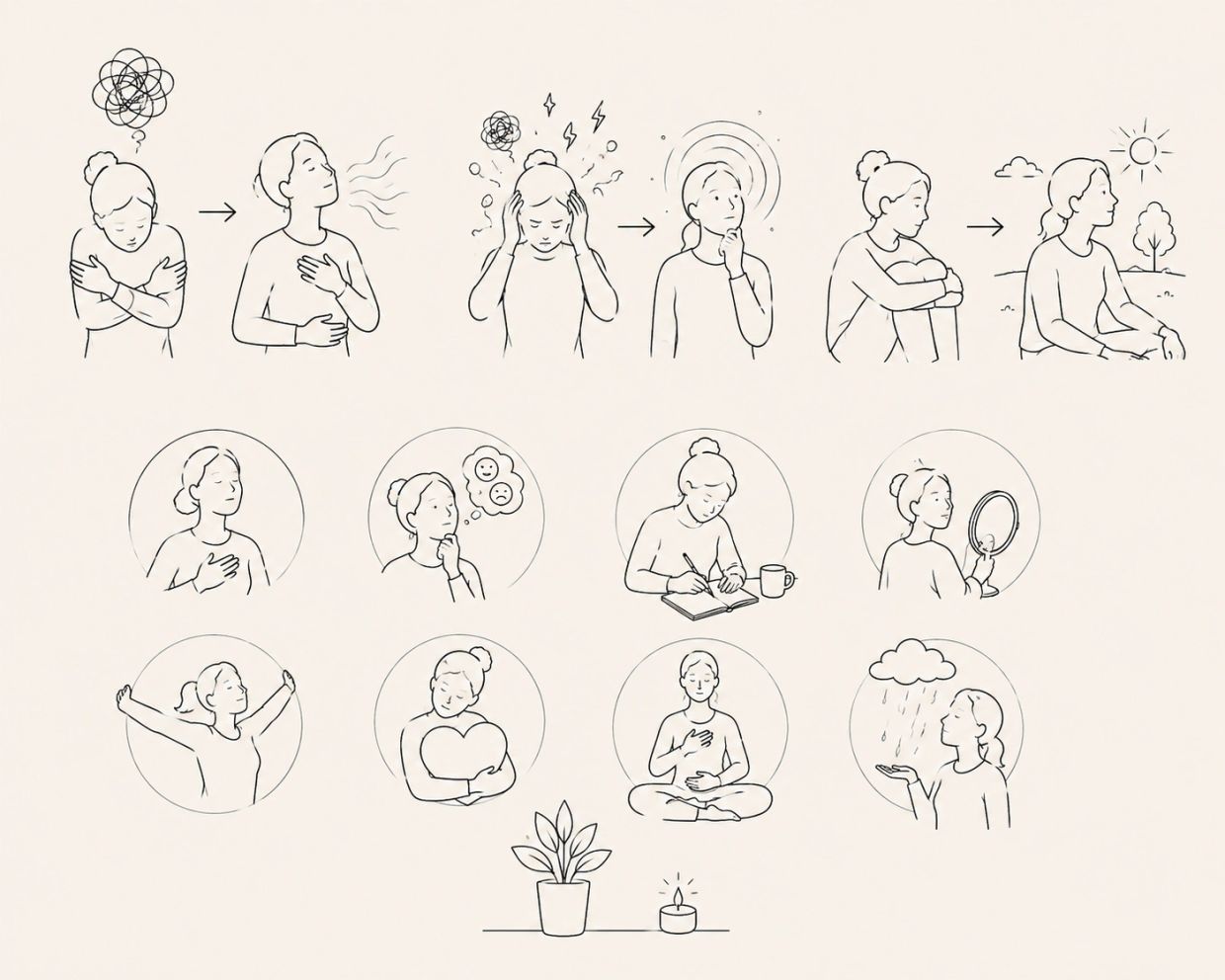

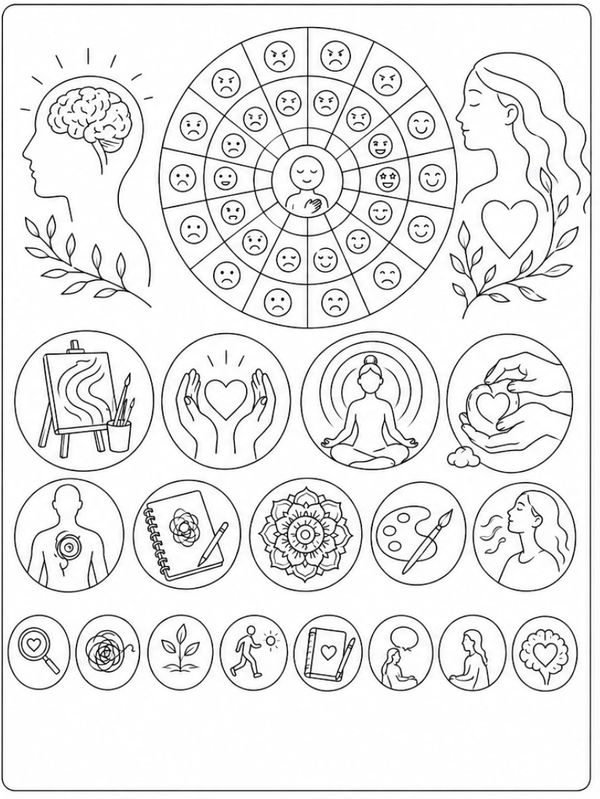
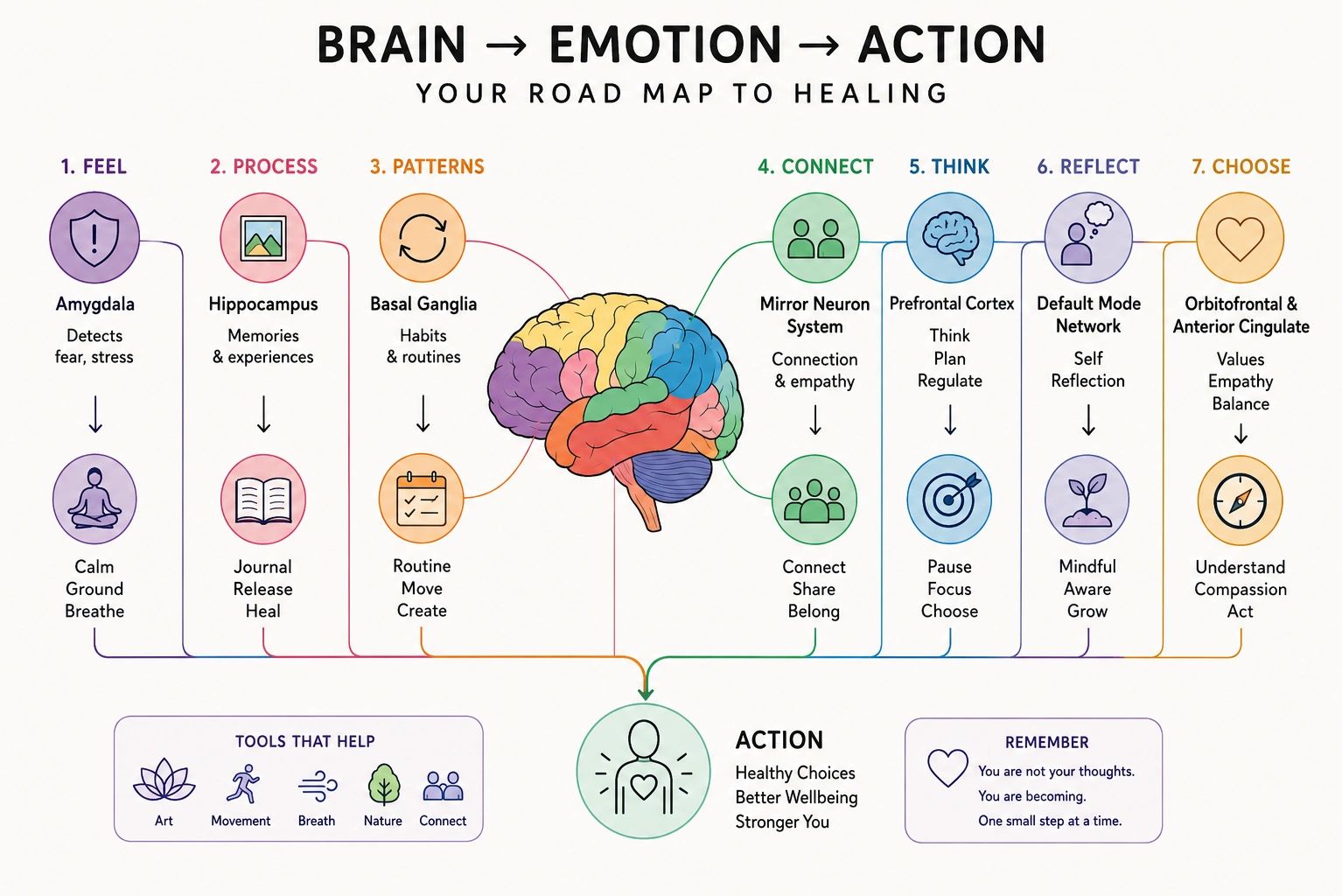
Each part of the brain has a role in helping you feel, process, protect, remember, connect, and act.
Healing happens when these systems begin working together again.
The goal is to understand the signal, regulate the body, and turn emotion into healthy action.
Using art, movement, breathing, reflection, creativity, and safe human connection, people can slowly rebuild communication between these regions of the brain.
SIMPLE HUMAN ROAD MAP
1. FEELING HAPPENS
Amygdala
What it does:
Detects fear, stress, danger, emotional intensity.
Human experience:
Helpful actions:
Goal:
Move from:
“I am unsafe.”
to
“I can slow down.”
2. THE BODY SPEAKS
Hippocampus + Body Memory
What it does:
Stores memories, emotional associations, lived experiences.
Human experience:
Helpful actions:
Goal:
Move from:
“I keep reliving this.”
to
“I can process and release this safely.”
3. THE BRAIN SEARCHES FOR CONTROL
Basal Ganglia
What it does:
Creates habits, routines, repetitive behaviors.
Human experience:
Helpful actions:
Goal:
Move from:
“I am trapped in patterns.”
to
“I can create healthier habits.”
4. THE HEART OF HUMAN CONNECTION
Mirror Neuron System
What it does:
Helps humans feel empathy, connection, belonging.
Human experience:
Helpful actions:
Goal:
Move from:
“I am alone.”
to
“I can connect safely with others.”
5. THINKING BEFORE REACTING
Prefrontal Cortex
What it does:
Decision-making, emotional regulation, planning, perspective.
Human experience:
Helpful actions:
Goal:
Move from:
“I react automatically.”
to
“I can pause and choose.”
6. SELF-REFLECTION & INNER WORLD
Default Mode Network (DMN)
What it does:
Self-reflection, identity, inner dialogue, imagination.
Human experience:
Helpful actions:
Goal:
Move from:
“I am lost in my thoughts.”
to
“I can observe my thoughts without becoming them.”
7. VALUES, EMPATHY & EMOTIONAL BALANCE
Orbitofrontal & Anterior Cingulate Cortex
What it does:
Helps with empathy, emotional balance, social awareness, moral decision-making.
Human experience:
Helpful actions:
Goal:
Move from:
“I am emotionally disconnected.”
to
“I can understand myself and others with compassion.”
THE FULL HEALING CONNECTION
Emotion → Awareness → Expression → Regulation → Action → Connection
The brain heals through:
This is why art therapy, fitness, mindfulness, journaling, nature, music, and supportive communities can all work together.
SIMPLE DAILY RESET SYSTEM
MORNING
Brain support:
Prefrontal Cortex + Basal Ganglia
MIDDAY
Brain support:
Mirror Neurons + Emotional Regulation Systems
EVENING
Brain support:
DMN + Hippocampus
WHAT PAL STUDIO REPRESENTS
PAL Studio connects:
The purpose is not perfection.
The purpose is reconnection.
Reconnection to:
A human being is not one brain part.
Healing happens when the whole system begins communicating again.
We use cookies to analyze website traffic and optimize your website experience. By accepting our use of cookies, your data will be aggregated with all other user data.